
17×9 Reverse Wire Wheels Fitment Guide: Best Cars, Tire Sizes & Clearance

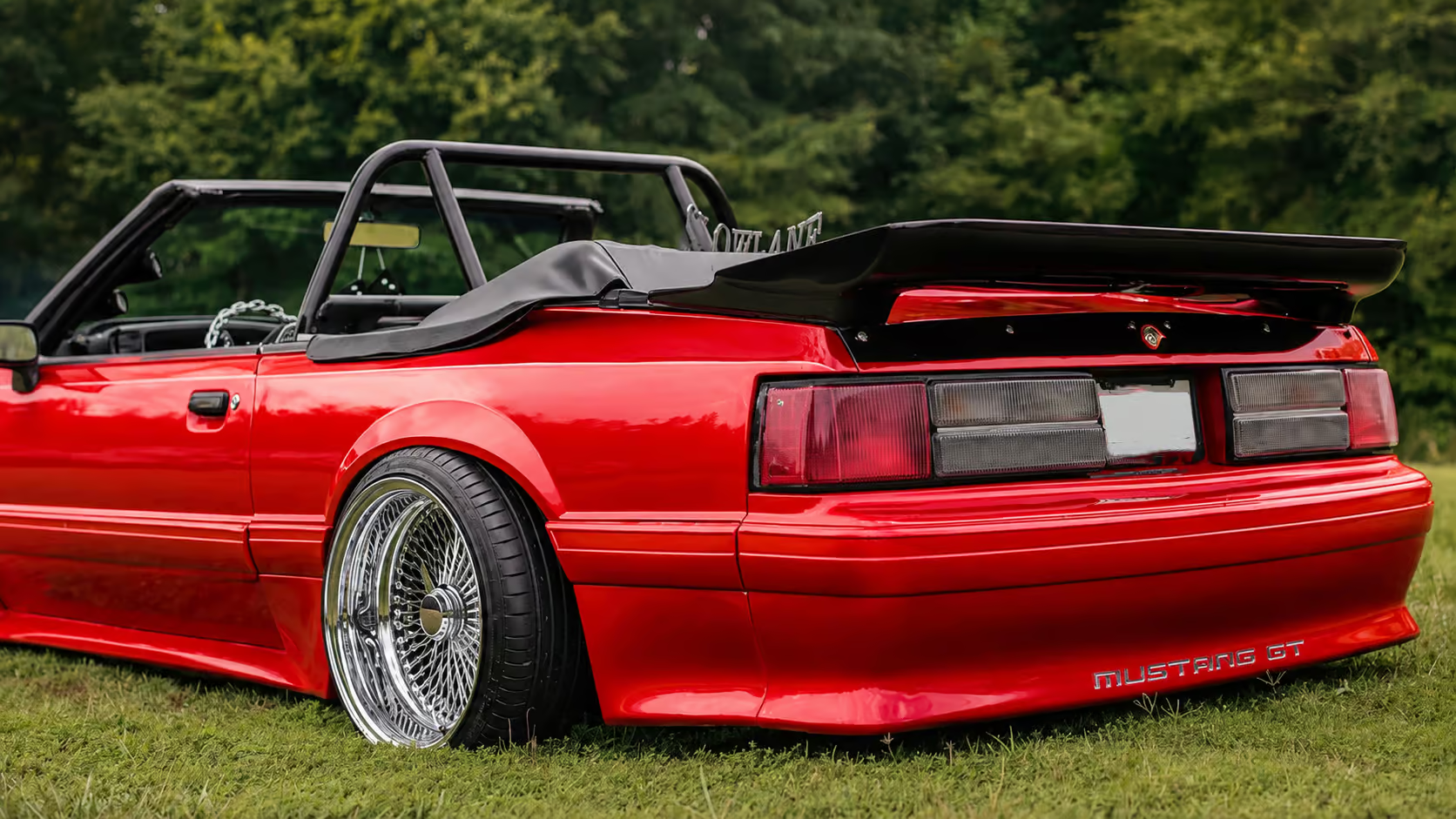
If you’re looking for one of the deepest, most aggressive wire-wheel setups available for a classic car, lowrider, street cruiser or custom truck, 17×9 reverse wire wheels deserve serious consideration.
Unlike a conventional 17×9 wheel, a reverse wire wheel positions much more of the wheel toward the outside of the vehicle. The result is the unmistakable deep-dish wire wheel appearance—a wide outer lip, visible spoke depth and an aggressive stance that works especially well on older rear-wheel-drive vehicles.
But that aggressive design also makes fitment extremely important.
A 17×9 reverse wheel should not be treated like a normal 17×9 aftermarket wheel. Fender clearance, suspension height, brake clearance, axle width, tire size and the exact wheel backspacing all affect whether the setup will work.
This guide covers the vehicles where 17×9 reverse wire wheels are most commonly considered, the tire sizes that can work with them, and what you should check before ordering.
What Is a 17×9 Reverse Wire Wheel?
The dimensions tell only part of the story:
- 17″ = wheel diameter
- 9″ = wheel width
- Reverse = deep-dish wheel construction that places more wheel width outward
- 100-spoke = traditional dense wire-wheel appearance
The most important specification is the reverse construction.
With a standard-offset wire wheel, more of the barrel extends inward toward the suspension. A reverse wheel moves the wheel center farther toward the inside of the barrel, exposing substantially more outer dish.
The result is the classic:
Deep Dish + Wide Stance + Poke
appearance associated with custom lowriders, old-school street cars and certain classic truck builds.
Explore our complete collection of 17×9 Reverse 100-Spoke Wire Wheels to find the perfect match for your street cruiser build.
Why 17×9 Is Special
A 17-inch diameter provides an interesting middle ground.
It is considerably larger than traditional 13″, 14″ and 15″ lowrider wheels, but it doesn’t completely change the character of a classic car the way a 22″, 24″ or 26″ wheel can.
You get:
- More visible wheel than a traditional 15″
- A substantially deeper appearance
- Room for a lower-profile radial tire
- More sidewall than most 20″+ combinations
- A classic wire-wheel appearance with a more aggressive street stance
For many builders, that’s exactly the attraction.
Best Vehicles for 17×9 Reverse Wire Wheels
There is no universal vehicle list guaranteeing bolt-on fitment. The following are popular candidates and platforms where this style is commonly considered.
Final fitment should always be verified using actual vehicle measurements.
1. Chevrolet Impala
Few cars are associated with wire wheels as strongly as the Chevrolet Impala.
Popular generations include:
- 1958–1964 Chevrolet Impala
- 1965–1970 Chevrolet Impala
- 1971–1976 Chevrolet Impala
- 1977–1985 Chevrolet Impala
- 1994–1996 Chevrolet Impala SS
The older full-size Impalas have the long body, chrome trim and rear-wheel-drive proportions that complement deep-dish wire wheels extremely well.
A 17×9 reverse setup produces a dramatically different appearance than traditional 13×7 or 14×7 lowrider wires. Instead of keeping the wheel tucked underneath the body, the goal is generally a wider street stance.
What to check
Older Impalas can have different available clearance depending on:
- Stock vs. shortened rear axle
- Disc brake conversions
- Hydraulic suspension
- Air suspension
- Fender modifications
- Previous body work
- Tire width
On skirted or very low cars, outer-quarter clearance becomes particularly important.
Fitment level: ★★★★☆
Style match: ★★★★★
Modification potential: Moderate depending on stance
2. Chevrolet Caprice
The Chevrolet Caprice is one of our favorite candidates for 17×9 reverse wire wheels.
Popular generations include:
- 1966–1970 Caprice
- 1971–1976 Caprice
- 1977–1990 Caprice
- 1991–1996 Caprice / B-Body
The large body and traditional rear-wheel-drive proportions make a deep reverse wheel look at home on these cars.
A 17-inch wheel is also large enough to modernize the appearance without pushing the build completely into the oversized-wheel category.
Box Chevy Caprice
The 1977–1990 Box Chevy deserves special attention.
These cars are extremely popular platforms for custom wheels, whitewalls, gold wheels and street-cruiser builds.
A 17×9 reverse can give a Box Chevy an aggressive old-school stance while maintaining significantly more tire sidewall than a 22″, 24″ or 26″ package.
Browse our curated selection of vintage-style Whitewall Tires designed to perfectly complement deep-dish wire rims
1991–1996 Bubble Caprice
The later B-body Caprice has a completely different body shape but remains a popular custom platform.
Because suspension height and rear-quarter clearance vary substantially from build to build, we strongly recommend measuring before ordering a reverse setup.
Fitment level: ★★★★☆
Style match: ★★★★★
Modification potential: Low to moderate depending on suspension and tire
3. Chevrolet Monte Carlo
The Monte Carlo is another natural home for deep-dish wire wheels.
Especially popular:
- 1970–1972 Monte Carlo
- 1973–1977 Monte Carlo
- 1978–1988 Monte Carlo
- 1981–1988 Monte Carlo SS
The G-Body Monte Carlo is particularly popular in the custom-car community.
Its relatively compact body means a 17×9 reverse wheel looks extremely wide compared with the vehicle itself.
That can create an incredible stance—but it also means you need to pay close attention to rear-quarter clearance.
Recommended approach
For aggressive builds, consider:
Front: 17×7 or 17×8 standard
Rear: 17×9 reverse
This keeps the deep dish in the rear while providing additional steering clearance up front.
Fitment level: ★★★★☆ rear
Style match: ★★★★★
Modification potential: Moderate
4. Buick Regal
The 1978–1987 Buick Regal is one of the most recognizable G-Body platforms and looks especially good on wire wheels.
This includes cars styled after:
- Buick Regal
- Regal Limited
- Turbo Regal
- Grand National-style custom builds
A reverse 17×9 gives the rear of the Regal considerably more visual width than a conventional wheel.
Chrome works beautifully on understated cars, while gold-center or full-gold wheels can completely transform a custom-painted Regal.
Because G-Body rear wheel wells aren’t unlimited, measure the outer quarter-panel clearance carefully before committing to four 17×9 reverse wheels.
For many builds, a staggered standard-front/reverse-rear configuration is the more practical choice.
Fitment level: ★★★★☆ rear
Style match: ★★★★★
Modification potential: Moderate
Check out our premium 17×9 Reverse Gold Center Wire Wheels & Tires Set to give your Regal that show-stopping contrast.
5. Oldsmobile Cutlass Supreme
Another G-Body favorite is the 1978–1988 Oldsmobile Cutlass Supreme.
The Cutlass has been part of lowrider and custom street culture for decades, and its squared body lines work particularly well with the round visual pattern of a 100-spoke wheel.
Popular approaches include:
Traditional: smaller reverse wires
Street cruiser: 17×8 standard wheels
Aggressive: 17×9 reverse wheels
Staggered: standard front + reverse rear
Cars running hydraulics or extremely low static suspension need additional clearance analysis because suspension travel can bring the quarter panel into contact with the tire or wheel.
Fitment level: ★★★★☆ rear
Style match: ★★★★★
Modification potential: Moderate
We specialize in classic setups. Take a look at our signature complete Wire Wheels Gallery for inspiration
6. Chevrolet El Camino
The El Camino is one of the strongest candidates for this wheel.
Popular models include:
- 1964–1967 El Camino
- 1968–1972 El Camino
- 1973–1977 El Camino
- 1978–1987 El Camino
Later G-Body El Caminos in particular look excellent with a deep 17-inch wire wheel.
The long rear quarter, pickup bed and rear-wheel-drive proportions give the exposed reverse lip plenty of visual room.
A full 17×9 front and rear setup is possible on some builds, while others are better served with narrower fronts.
Why builders like this combination
A 17×9 doesn’t overwhelm the El Camino’s body.
Instead, it creates a muscular old-school street stance while retaining enough tire sidewall to keep the car looking period-inspired.
Fitment level: ★★★★☆
Style match: ★★★★★
Modification potential: Vehicle dependent
7. Cadillac Fleetwood & Brougham
For a luxury lowrider appearance, it is hard to beat a Cadillac on wire wheels.
Popular candidates include:
- Cadillac Fleetwood
- Fleetwood Brougham
- Cadillac Brougham
- Older rear-wheel-drive DeVille models
These cars provide the long body, formal roofline and chrome trim that make wire wheels stand out.
However, Cadillacs frequently present an additional challenge:
Fender skirts.
A deep reverse wheel pushes outward, while a fender skirt reduces the available outer clearance.
That combination means 17×9 reverse wheels should never be assumed to fit underneath factory Cadillac skirts.
Depending on the build, owners may run without skirts, modify the vehicle, alter suspension height, select a narrower tire or choose a less aggressive wheel.
Fitment level: ★★★☆☆
Style match: ★★★★★
Modification potential: Moderate to high on skirted cars
8. Lincoln Town Car
The rear-wheel-drive Lincoln Town Car is another popular platform for custom wire wheels.
Especially:
- 1980s Town Car
- 1990–1997 Town Car
- 1998–2011 Town Car
The large body makes a 17-inch wheel appear proportionally balanced, while the deep reverse dish adds substantially more attitude than a conventional luxury wheel.
However, later Town Cars can have brake, suspension and fender-clearance considerations that make proper measurement essential.
If maximum deep dish is the priority, the rear axle is usually the first place we evaluate.
Style match: ★★★★★
Modification potential: Vehicle dependent
9. Chevrolet Malibu & Other G-Bodies
The GM G-Body family is one of the most important groups to consider for 17×9 reverse wheels.
That includes:
- Chevrolet Malibu
- Chevrolet Monte Carlo
- Buick Regal
- Oldsmobile Cutlass
- Pontiac Grand Prix
Because these cars share similar architecture, they are frequently customized using similar wheel styles.
But decades of modifications mean two supposedly identical G-Bodies may have completely different usable wheel clearance.
One may have:
- Stock rear end
while another has:
- Shortened rear end
- Disc brake conversion
- Different springs
- Hydraulics
- Air suspension
- Rolled quarter panels
Never determine reverse-wheel fitment from year and model alone.
10. Chevrolet C10
The classic Chevrolet C10 is another excellent candidate.
Popular generations include:
- 1960–1966 C10
- 1967–1972 C10
- 1973–1987 Squarebody C10
Deep-dish wire wheels create a very different appearance from traditional truck wheels.
They work particularly well on:
- Lowered C10s
- Air-bagged trucks
- Custom street trucks
- Show trucks
- Restomod builds
However, rear axle width and brake conversions vary considerably on classic trucks.
Measure before ordering.
Style match: ★★★★★
Modification potential: Low to moderate depending on build
11. 1988–1998 Chevrolet C1500 / GMC Sierra OBS
The OBS truck scene is another great match for 17×9 reverse wires.
Popular platforms include:
- Chevrolet C1500
- GMC Sierra
- 2WD Silverado
- Short-bed street trucks
A 17×9 deep-dish wire wheel works especially well with a lowered 2WD truck because the wheel doesn’t look excessively large compared with the body.
Chrome gives the truck a classic street look, while gold-center and full-gold combinations lean more toward a show-truck aesthetic.
Brake and suspension clearance still need to be checked before installation.
12. Chevrolet S10 & GMC S15/Sonoma
For builders intentionally chasing an extreme wide-wheel appearance, the S10 platform is worth considering.
Popular trucks include:
- Chevrolet S10
- GMC S15
- GMC Sonoma
Because these trucks have much smaller bodies than a C10 or C1500, a 9-inch reverse wheel looks extremely aggressive.
Expect the wheel/tire combination to sit significantly farther outward than a conventional wheel.
This is generally not a factory-style fitment.
It’s a custom stance.
Fender clearance, ride height and steering clearance should all be checked carefully.
What Tires Fit 17×9 Reverse Wire Wheels?
Tire selection can completely change how the wheel fits.
Common 17-inch tire sizes considered for custom 17×9 wire-wheel builds include:
205/40R17
Very low-profile and narrow relative to a 9-inch wheel.
This combination produces an aggressive stretched appearance and can provide additional fender clearance, but it is not appropriate for every tire model or vehicle weight. Always verify the tire manufacturer’s approved rim-width range and load rating.
215/45R17
A popular low-profile combination seen on deep-dish 17×9 wire-wheel packages.
It offers more sidewall than a 205/40R17 while retaining the aggressive wheel-focused appearance.
215/55R17
A much taller tire.
This can work particularly well when the goal is an old-school cruiser appearance rather than an ultra-low-profile stance.
The taller overall diameter means fender and suspension clearance become more important.
225-Series and Wider Tires
A wider tire may provide a more conventional sidewall profile, but it also increases the likelihood of outer-fender interference when combined with an aggressive reverse wheel.
Important: Never choose a tire based on appearance alone. Confirm the tire manufacturer’s approved wheel-width range, overall diameter, load rating and vehicle requirements.
17×9 Reverse on All Four Wheels or Rear Only?
This is one of the most important decisions.
Option 1: 17×9 Reverse Front & Rear
This creates the most aggressive appearance.
Best suited to vehicles where measurements confirm sufficient:
- Front fender clearance
- Steering clearance
- Brake clearance
- Rear-quarter clearance
The front is usually the difficult part because the wheel must clear the body throughout the entire steering range.
Option 2: Staggered Standard Front + Reverse Rear
For many classic street cars, this is our preferred setup.
For example:
Front: 17×7 or 17×8 Standard
Rear: 17×9 Reverse
You retain the enormous rear dish while gaining additional front steering and fender clearance.
Visually, the wider rear wheels also emphasize the rear-wheel-drive proportions of the car.
Will 17×9 Reverse Wheels Stick Out?
Usually, yes—compared with a conventional positive-offset wheel.
That’s largely the point.
A reverse wheel is designed to produce an aggressive deep-dish stance.
Exactly how far it extends depends on the wheel’s actual:
- Backspacing
- Offset
- Adapter thickness
- Vehicle hub position
- Axle width
Do not rely on the term “reverse” alone.
Two different 17×9 reverse wheels can have different backspacing and therefore sit differently on the same vehicle.
Do 17×9 Reverse Wire Wheels Need Spacers?
Do not automatically add spacers.
A reverse wheel already positions substantial wheel width outward. Adding another spacer can make the fitment even more aggressive.
More importantly, traditional knock-off wire wheels use a vehicle-specific adapter system.
The correct approach is to verify the complete wheel-and-adapter combination rather than trying to correct an unknown fitment with generic spacers.
Can You Put 17×9 Reverse Wheels on a Front-Wheel-Drive Car?
Physically, some combinations may be possible.
That does not make them an ideal application.
Deep reverse wheels are primarily associated with rear-wheel-drive platforms because modern front-wheel-drive vehicles commonly require much higher positive offsets.
Putting an extremely low-backspacing reverse wheel on one can cause:
- Extreme wheel poke
- Fender interference
- Steering interference
- Poor suspension geometry
- Increased bearing load
- Brake-clearance problems
For most modern FWD applications, we recommend a wheel designed around the vehicle’s proper offset rather than forcing a deep reverse configuration onto it.
Brake Clearance Matters
Bolt pattern is only one part of wire-wheel fitment.
You also need to consider:
- Brake caliper size
- Rotor diameter
- Hub diameter
- Stud length
- Adapter clearance
- Wheel center clearance
This becomes especially important on cars that have been upgraded to aftermarket disc brakes.
A wheel can have the correct adapter for your bolt pattern and still fail to clear the brakes.
How to Measure Your Vehicle for 17×9 Reverse Wheels
Before ordering, we recommend checking four areas.
1. Outer Fender Clearance
Measure from the hub mounting surface outward toward the fender.
This helps determine how much outward wheel placement the body can accommodate.
2. Inner Clearance
Measure toward:
- Frame
- Control arms
- Shocks
- Springs
- Brake components
3. Front Steering Clearance
On the front axle, measurements should be checked with the steering:
- Straight
- Full left
- Full right
4. Suspension Travel
A wheel that clears while the car is sitting still may rub when:
- Hitting a bump
- Carrying passengers
- Turning into a driveway
- Lowering air suspension
- Operating hydraulics
Static clearance isn’t enough.
Which Vehicles Look Best on 17×9 Reverse Wire Wheels?
If we had to build a shortlist based on the style and proportions of the vehicle, these would be among our favorites:
| Vehicle | 17×9 Reverse Potential | Why |
|---|---|---|
| Chevy Impala | Excellent | Classic wire-wheel platform |
| Chevy Caprice / Box Chevy | Excellent | Large body + RWD proportions |
| Monte Carlo | Excellent | Deep rear dish complements G-Body |
| Buick Regal | Excellent | Iconic custom/lowrider platform |
| Oldsmobile Cutlass | Excellent | Traditional G-Body wire-wheel look |
| Chevy El Camino | Excellent | Wide street-machine appearance |
| Cadillac Fleetwood/Brougham | Good* | Excellent style; skirts require attention |
| Lincoln Town Car | Good | Big-body luxury appearance |
| Chevy Malibu G-Body | Excellent | Excellent staggered candidate |
| Chevy C10 | Excellent | Deep-dish custom-truck appearance |
| Chevy/GMC OBS | Excellent | Strong 1990s street-truck aesthetic |
| Chevy S10/Sonoma | Custom | Extreme poke/custom stance |
*Actual fitment depends on vehicle configuration and measurements.
What Finish Looks Best?
Once fitment is determined, finish becomes the fun part.
Chrome 17×9 Reverse Wire Wheels
The timeless choice.
Chrome works particularly well with:
- Black paint
- Candy paint
- Factory restoration colors
- Chrome-heavy classic cars
- Whitewall tires
Gold Center With Chrome Lip
One of the best combinations for a deep-dish wheel because the contrasting chrome outer lip emphasizes how deep the wheel actually is.
This combination is especially striking on:
- Regals
- Cutlasses
- Monte Carlos
- Impalas
- Caprices
- Cadillacs
Full Gold
For a show-oriented build, an all-gold wheel completely changes the character of the car.
Rose Gold
Rose gold provides a more contemporary luxury interpretation of the traditional wire-wheel aesthetic and works especially well with black, white, burgundy and certain candy-painted vehicles.
17×9 Reverse vs. 17×8 Standard: Which Should You Choose?
Choose 17×8 Standard when your priorities are:
- Easier fitment
- Less wheel poke
- Better front clearance
- More traditional stance
- Daily-driving practicality
Choose 17×9 Reverse when your priorities are:
- Maximum deep dish
- Wider stance
- Exposed outer lip
- Aggressive rear-wheel appearance
- Show-car or custom-street styling
Or combine the two:
17×8 Standard Front + 17×9 Reverse Rear
For many rear-wheel-drive classics, this provides the best balance of appearance and practicality.
Frequently Asked Questions About 17×9 Reverse Wire Wheels
Are 17×9 reverse wire wheels made for lowriders?
They are popular for lowriders, classic cars and custom street builds, but they create a considerably larger and wider appearance than traditional 13″, 14″ or 15″ lowrider wheels.
Will 17×9 reverse wire wheels fit a Chevy Impala?
They can work on many classic Impala builds, but year, suspension, brakes, tire size and available inner/outer clearance must be checked before ordering.
Will 17×9 reverse wheels fit a Box Chevy?
The Box Chevy Caprice is an excellent platform stylistically for 17×9 reverse wires. Actual fitment depends on ride height, tire size, rear axle and available fender clearance.
Will 17×9 reverse wheels fit a Buick Regal?
They are popular candidates for G-Body builds such as the Regal, particularly as a rear wheel. A standard-front/reverse-rear staggered combination can make fitment easier.
What tire size should I use on 17×9 wire wheels?
There isn’t one universal tire size. 205/40R17, 215/45R17 and taller 215-series combinations are used on custom builds, but the correct tire depends on the vehicle, desired appearance, wheel specifications, tire manufacturer’s approved rim-width range and required load capacity.
Do reverse wire wheels stick out?
Reverse wheels generally position significantly more of the wheel outward than standard or high-offset wheels, creating the deep-dish/poke appearance. The exact position depends on actual backspacing and the adapter/hub configuration.
Can I run 17×9 reverse wheels front and rear?
On some vehicles, yes. However, front fitment is more difficult because the wheel needs adequate clearance while steering. A narrower standard-offset front with a 17×9 reverse rear is often worth considering.
Are adapters included with knock-off wire wheels?
Knock-off wire-wheel systems typically require adapters matched to the vehicle’s bolt pattern. Always verify the exact hardware supplied with the wheel set before installation.
Shop 17×9 Reverse Wire Wheels
If you’re building a classic Impala, Caprice, Monte Carlo, Regal, Cutlass, El Camino, Cadillac, Lincoln or custom truck, a 17×9 reverse 100-spoke wire wheel can create one of the deepest and most distinctive wire-wheel stances available.
[Shop Wire Wheels & Tire Packages]
Build a complete wheel-and-tire combination with professional fitment verification.
Not Sure If 17×9 Reverse Wheels Will Fit Your Car?
Don’t guess—send us your vehicle information.
Provide:
- Year
- Make
- Model
- Current wheel/tire size
- Stock, lowered, air ride or hydraulics
- Any brake upgrades
- A side photo of the vehicle
The Ninja Tire team can help determine whether a 17×9 reverse setup, staggered 17×8/17×9 combination, or standard-offset wire wheel makes the most sense for your build.
Fitment Disclaimer: Vehicle recommendations in this guide are general starting points and do not constitute a guaranteed fitment. Classic vehicles are frequently modified, and axle width, suspension, brake conversions, bodywork, tire size and wheel backspacing can substantially affect clearance. Always verify exact fitment before installation.


