
13-Inch Wire Wheel Fitment Guide: 13×7 vs 13×5.5 for Lowriders

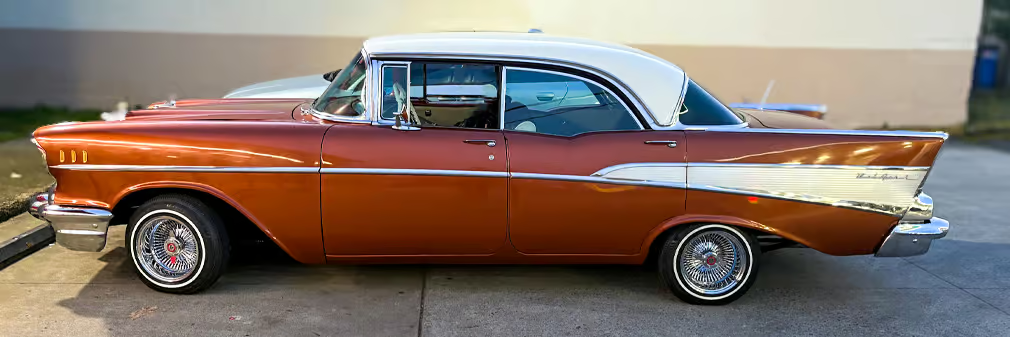
Few wheel setups are as closely connected with traditional lowrider style as a set of 13-inch wire wheels. But choosing the right 13-inch wheel involves much more than deciding between chrome and gold or 72 and 100 spokes.
Wheel width, standard versus reverse construction, backspacing, adapters, tire size, brake clearance, fender clearance and suspension travel can completely change how the same 13-inch wheel fits a car.
Two of the most common sizes are 13×5.5 and 13×7, and although they share the same 13-inch diameter, they can produce very different results.
This guide explains those differences in practical terms so you can decide which setup makes sense for your Impala, Monte Carlo, Regal, Cutlass, Caprice, Cadillac or other classic lowrider build.
Quick answer: A 13×5.5 wire wheel generally provides a narrower footprint and more clearance, while a 13×7 gives you more width and can produce a more aggressive stance—especially in a reverse configuration. However, the words “13×7” alone do not tell you how far the wheel will sit outward. Offset, backspacing, adapter design and the vehicle itself still need to be considered.
Quick 13×5.5 vs. 13×7 Wire Wheel Fitment Comparison
| Setup | General Character | Outer Stance | Clearance | Best Considered For |
|---|---|---|---|---|
| 13×5.5 Standard | Narrow and conservative | More tucked | Highest | Tight-clearance classic builds |
| 13×5.5 Reverse | Narrow wheel with deeper lip | Moderate | Good to moderate | Traditional appearance without maximum width |
| 13×7 Standard | Wider footprint | Moderate | Moderate | Wider classic fitment |
| 13×7 Reverse | Wide, deep-dish appearance | Most aggressive | Lowest | Traditional lowrider stance where clearance allows |
This is a general comparison, not a universal fitment chart. Two wheels labeled “reverse” can have different actual backspacing, and two vehicles of the same model can have different clearances because of brakes, suspension modifications, axle changes or previous body work.
What Does 13×5.5 Actually Mean?
A 13×5.5 wire wheel has a 13-inch nominal bead-seat diameter and a 5.5-inch nominal bead-seat width.
That does not mean the wheel measures exactly 5.5 inches from outside edge to outside edge. Wheel width is measured between the tire bead seats, so the physical overall wheel width is usually greater.
For a lowrider, the important advantage of a 13×5.5 setup is its narrower footprint.
Why Choose 13×5.5 Wire Wheels?
A narrower wheel can provide additional room between the wheel and the fender lip, inner wheelhouse, suspension components, steering components and surrounding bodywork.
That can be especially valuable on a car designed to sit very low, a vehicle with limited front steering clearance, or a classic body where keeping the wheel farther inside the fender is more important than maximizing lip depth.
A 13×5.5 can also deliver a very traditional small-wheel appearance without requiring the wider stance of a 13×7.
What Does 13×7 Mean?
A 13×7 wire wheel uses the same 13-inch nominal diameter but increases the bead-seat width to seven inches.
That is a 1.5-inch increase in nominal width compared with a 13×5.5 wheel.
If two wheels had exactly the same centerline offset, that additional width would theoretically add approximately 0.75 inch toward the inside and 0.75 inch toward the outside.
Lowrider wire wheels are rarely that simple, however.
A reverse 13×7 may move significantly more of the wheel toward the outside of the vehicle than a standard 13×7, which is why width and offset must always be considered together.
Why Are 13×7 Wire Wheels Popular on Lowriders?
The extra width gives the wheel more visual presence, and a reverse design can create the deep outer lip closely associated with traditional lowrider styling.
A 13×7 setup can be an excellent choice when the builder wants more width, a deeper visible dish, a stronger outward stance and classic small-wheel proportions.
But the wider and more aggressive the setup becomes, the more important fender and suspension clearance become.
13×7 vs. 13×5.5: Why the 1.5-Inch Difference Matters
It is easy to look at 13×5.5 and 13×7 and think the difference is minor. On a lowered classic car, however, 1.5 inches of wheel width can be significant.
Wheel width can affect outer fender clearance, inner suspension clearance, steering clearance, tire sidewall shape, how deeply the wheel tucks when the suspension is lowered, how far the wheel sits outside the body and available clearance while three-wheeling or operating hydraulics.
This is why the wheel configuration should be chosen around the entire vehicle rather than simply selecting the deepest-looking wheel.
Standard vs. Reverse 13-Inch Wire Wheels
One of the most important concepts in lowrider wire wheel fitment is understanding standard versus reverse.
If the deep-dish appearance is your main goal, you can also browse our complete collection of reverse wire wheels.
Standard Wire Wheels
A standard configuration generally places more of the wheel barrel toward the inside of the vehicle and produces a less aggressive outer lip.
Depending on the exact wheel specifications, this can help keep the wheel closer to the factory body line.
Standard fitment may make sense when the car has limited outer-fender clearance, the owner wants a more tucked appearance, the vehicle has fender skirts, or maximum deep-dish appearance is not the priority.
Reverse Wire Wheels
A reverse wire wheel positions the center differently within the wheel barrel, creating a deeper outer lip and generally moving more of the wheel outward.
This is the configuration many people visualize when they think of a traditional lowrider on deep-dish wires.
The tradeoff is clearance. The farther outward the wheel moves, the less room there may be between the tire and fender.
That becomes particularly important when the suspension moves through its full range of travel.
Does “Reverse” Tell You the Exact Offset?
No. This is one of the biggest fitment mistakes people make.
“Reverse” describes the general wheel construction and stance, but it should not be treated as one universal offset specification across every manufacturer and wheel design.
A 13×7 reverse wheel from one manufacturer may not have the exact same backspacing or outer position as another 13×7 reverse wheel.
Before ordering for a tight-clearance application, actual wheel specifications should be confirmed.
How to Understand Wheel Poke
Wheel “poke” describes how far the wheel or tire sits outward relative to the body or fender.
Wheel Width
A wider wheel occupies more physical space. Moving from 13×5.5 to 13×7 increases nominal wheel width by 1.5 inches.
Offset and Backspacing
Offset or backspacing determines how the wheel’s width is distributed toward the inside and outside of the vehicle.
Knock-Off Adapter Position
Traditional knock-off wire wheel systems use an adapter between the vehicle hub and wheel. The complete system—not just the bare wheel—must be considered when evaluating final wheel position.
If you are comparing two conventional wheels with known offsets, an approximate change in outer position can be calculated from wheel-width and offset differences.
For a lowrider knock-off setup, however, the safest approach is to measure the actual wheel and adapter combination instead of assuming that every “reverse” wheel creates the same amount of poke.
Tucked vs. Flush vs. Poke on a Lowrider
Tucked Fitment
A tucked wheel sits farther inside the body line.
This can be especially desirable on cars with fender skirts or builds designed to lower deeply into the wheel opening.
A narrower 13×5.5 or a suitable standard configuration may provide more opportunity to achieve this type of fitment.
Flush Fitment
Flush means the outside of the wheel and tire visually align closely with the body.
It gives the wheel more presence without intentionally extending well beyond the fender.
Poke Fitment
Poke occurs when part of the wheel or tire sits outside the normal fender line.
Reverse 13×7 wheels are more likely to create this appearance because of their wider construction and deeper dish.
Some builders intentionally want visible poke. Others need the wheel to tuck completely when the suspension is dropped.
Neither approach is universally correct. The right answer depends on the intended stance and the vehicle.
13×5.5 vs. 13×7 Wire Wheels for Hydraulics
Hydraulics make wheel fitment more complicated because the suspension does not remain at one fixed ride height.
A wheel that clears perfectly while cruising can contact the body when the vehicle is lowered. A setup that looks perfect while parked can have insufficient clearance while turning. A wheel that works in a normal four-wheel stance may also behave differently during a three-wheel maneuver.
For more traditional setups and available configurations, explore our complete lowrider wire wheels collection.
For a hydraulic lowrider, the wheel should be evaluated at normal cruising height, fully lowered position, full left steering lock, full right steering lock and throughout the range of suspension movement you actually intend to use.
Outer-fender clearance is only one part of the equation. Inner barrel clearance, control arms, tie rods, brake components and other suspension hardware also need to be considered.
A narrower wheel can give you a larger margin for suspension movement, while a reverse 13×7 can provide a more aggressive stance at the cost of some clearance.
Brake Clearance: The Issue Many Builders Forget
The wheel may physically fit inside the fender and still not clear the brakes.
This is particularly important on classic cars that have been converted from original drum brakes to larger aftermarket disc brakes.
A 13-inch wheel has less internal barrel diameter than a larger wheel, which gives the brake assembly less room.
Before ordering 13-inch wheels, verify whether the vehicle has factory drums, factory discs, an aftermarket disc conversion, oversized calipers or another brake upgrade.
If the vehicle has a large brake conversion, do not assume a 13-inch wheel will clear simply because another car of the same year and model runs 13s. The brake setup may be completely different.
What Tire Size Should You Use on 13-Inch Wire Wheels?
This is an area where appearance, lowrider tradition and tire-manufacturer specifications need to be separated.
155/80R13 is frequently associated with small-diameter traditional lowrider setups because its approximately 22.8-inch overall diameter creates the compact wheel-and-tire proportions many builders want.
However, tire size alone does not determine whether that tire is approved for a particular wheel width.
Different tire manufacturers publish an approved rim-width range for each tire model. For street-driven vehicles, the tire manufacturer’s approved rim-width specification should be followed.
A Note About 155/80R13 Tires on 13×7 Wire Wheels
You will often see 155/80R13 tires associated with 13×7 lowrider setups, particularly where a stretched sidewall appearance is desired.
That does not mean every 155/80R13 tire manufacturer approves installation on a seven-inch-wide wheel.
Before choosing that combination, check the specifications of the exact tire being used.
If the approved rim-width range does not include the wheel width, the combination should not be presented as a manufacturer-approved street fitment.
This distinction is important when comparing a traditional show-oriented stretched setup with a conventional tire-and-wheel combination intended to remain within published specifications.
Whitewall Tires and 13-Inch Wire Wheels
A whitewall paired with a small-diameter wire wheel is one of the most recognizable combinations in traditional custom-car styling.
Explore our custom whitewall tires if you are building a complete classic wheel-and-tire combination.
The whitewall width can dramatically change the appearance of the setup.
A narrower whitewall keeps more of the black sidewall visible and can produce a cleaner, slightly more understated look. A wider whitewall emphasizes the tire and creates a stronger traditional appearance.
The important fitment point is that adding a custom whitewall treatment does not change the need to verify the underlying tire’s load rating, speed rating, approved rim-width range, overall diameter and vehicle suitability.
Choose the tire first based on fitment and specifications, then choose the whitewall treatment that gives you the appearance you want.
Will 13-Inch Wire Wheels Fit a Chevy Impala?
Many generations of Chevrolet Impala are strongly associated with traditional lowrider builds and 13-inch wire wheels.
But “Impala” alone is not enough information to guarantee fitment.
Before choosing between 13×5.5 and 13×7, verify the exact model year, suspension configuration, brake system, whether the vehicle has fender skirts and whether the car has been modified.
A car running original-style brakes and suspension can have very different clearance from an Impala with a modern disc conversion, narrowed rear axle or custom hydraulic setup.
For an aggressive deep-dish appearance, many builders consider a reverse configuration. When maximum tuck and clearance are more important, a narrower or less aggressive setup may be preferable.
13-Inch Wire Wheels on a Chevrolet Monte Carlo
Classic Chevrolet Monte Carlo builds are another popular application for small-diameter wire wheels.
When determining fitment, pay particular attention to front steering clearance and rear fender clearance.
A reverse 13×7 can create the stronger outward lowrider stance many builders want, while a narrower configuration may provide additional room when the car is lowered aggressively.
Always evaluate the actual suspension and brake system rather than relying only on another Monte Carlo you have seen online.
13-Inch Wire Wheels on a Buick Regal
Buick Regal lowriders can look right at home on 13-inch wire wheels, particularly on traditional G-body builds.
With any G-body application, wheel position, tire clearance and suspension modifications should be considered together.
If the goal is a deep-dish look, a reverse 13×7 may be considered where the vehicle has sufficient room.
If the build prioritizes additional clearance or a more tucked wheel position, a narrower configuration may be a better starting point.
13-Inch Wire Wheels on an Oldsmobile Cutlass
The Oldsmobile Cutlass and Cutlass Supreme are also popular platforms for traditional lowrider styling.
As with the Regal and Monte Carlo, seemingly identical cars can have different suspension heights, brake conversions and body clearances after decades of modification.
Do not choose the wheel solely because another Cutlass uses the same advertised size. Confirm the complete setup.
13-Inch Wire Wheels on a Chevy Caprice
A classic Chevrolet Caprice can accommodate several different lowrider wheel styles depending on the generation and suspension setup.
The decision between 13×5.5 and 13×7 should be based on whether the desired stance is more tucked or more aggressive.
Also verify brake clearance carefully on cars that have received upgraded front disc components.
What About 13-Inch Wire Wheels on Classic Cadillacs?
Many older Cadillac models have been customized with small-diameter wire wheels, but Cadillac fitment deserves additional attention because of vehicle weight, brake size and model-to-model differences.
Wheel load capability, tire load rating and brake clearance should all be confirmed before installation.
A setup that is appropriate for a lighter coupe should not automatically be assumed appropriate for a substantially heavier vehicle.
How to Measure Your Car Before Ordering 13-Inch Wire Wheels
For the most reliable fitment decision, inspect and measure the actual vehicle rather than relying only on year, make and model.
- Record the current wheel and tire size. Include wheel width if known.
- Determine the existing wheel’s offset or backspacing whenever possible.
- Measure outer clearance from the existing tire to the fender lip.
- Measure inner clearance to suspension, steering and chassis components.
- Identify the brake setup. Pay particular attention to aftermarket disc conversions.
- Check full steering lock in both directions.
- Cycle the suspension. On hydraulic or air-suspension vehicles, inspect clearance throughout the range of travel you intend to use.
These measurements give a fitment specialist much more useful information than simply saying, “I have a 1964 Impala.”
Common 13-Inch Wire Wheel Fitment Mistakes
| Mistake | Why It Causes Problems |
|---|---|
| Choosing only by wheel diameter | 13×5.5 and 13×7 can fit very differently. |
| Assuming every reverse wheel is identical | Actual backspacing can vary between wheel designs. |
| Ignoring adapters | The complete installed wheel and adapter system determines final position. |
| Checking clearance only at ride height | Hydraulic and lowered cars move through a much wider suspension range. |
| Ignoring brake conversions | Larger calipers may not clear a 13-inch wheel barrel. |
| Choosing a tire only by appearance | Tire width, load rating and approved wheel width also matter. |
| Copying another car’s setup | Similar cars may have different brakes, suspension and body modifications. |
13×5.5 or 13×7: Which Should You Choose?
Consider 13×5.5 when your priorities are generally more clearance, a narrower wheel position, easier tuck or a conservative traditional setup.
Consider 13×7 when your priorities are generally more width, stronger visual presence, a deeper dish and a more aggressive traditional lowrider stance.
Then decide whether you want standard or reverse positioning.
A 13×7 standard and 13×7 reverse should not be treated as the same fitment simply because their diameter and width match.
Which 13-Inch Wire Wheel Setup Creates the Deepest Dish?
If deep dish is the goal, a reverse 13×7 wire wheel will generally produce a much more pronounced outer lip than a narrower or standard configuration.
But maximum dish should never be the only consideration.
The deeper and farther outward the wheel sits, the more carefully the vehicle should be checked for outer-fender clearance.
On a hydraulic car, that means checking clearance throughout the suspension movement you actually plan to use—not just while the vehicle is sitting level in the driveway.
72-Spoke vs. 100-Spoke: Does Spoke Count Affect Fitment?
In most cases, spoke count is primarily a design choice rather than the main factor controlling wheel position.
A 72-spoke configuration gives the wheel a more open traditional lace pattern, while a 100-spoke wheel provides a denser appearance with more visual detail.
Finish also changes the character of the setup. Browse our chrome wire wheels for the traditional polished look, or explore gold wire wheels for a more customized lowrider or show-car finish.
For actual fitment, wheel width, construction, offset or backspacing, adapter design and brake clearance are more important than simply choosing 72 versus 100 spokes.
Knock-Off Wire Wheel Fitment and Installation
Traditional knock-off wire wheels use an adapter system that mounts between the vehicle hub and the wheel.
Correct installation matters just as much as selecting the correct wheel.
The adapter must match the vehicle’s bolt pattern and mounting requirements, and directional components must be installed according to the wheel manufacturer’s instructions.
After installation, inspect adapter seating, wheel engagement, spinner installation, tire pressure and wheel-to-body clearance.
Follow the wheel manufacturer’s instructions for initial inspection and periodic maintenance.
If you are unfamiliar with knock-off wire wheel systems, professional installation by a shop experienced with traditional wire wheels is strongly recommended.
Is 13×7 Better Than 13×5.5 for a Lowrider?
There is no universally “better” size.
A 13×7 is often chosen when the builder wants the wider, deeper-looking stance traditionally associated with aggressive lowrider setups.
A 13×5.5 can be the better option when maintaining clearance and keeping the wheel farther inside the body are more important.
The correct answer depends on the car and the intended stance.
A heavily lowered hydraulic Impala with fender skirts may have very different requirements from a Regal built primarily for cruising at normal ride height.
Frequently Asked Questions About 13-Inch Lowrider Wire Wheel Fitment
What is the difference between 13×7 and 13×5.5 wire wheels?
Both wheels use a 13-inch nominal diameter, but the 13×7 is 1.5 inches wider at the bead seats. That additional width affects inner and outer clearance and can produce a more aggressive stance, especially when combined with reverse construction.
Do 13×7 wire wheels stick out farther than 13×5.5 wheels?
They can, but width alone does not determine final wheel position. Offset, backspacing and adapter geometry also matter. A reverse 13×7 will generally produce a more aggressive outward stance than a narrower standard configuration.
What does reverse mean on a wire wheel?
Reverse refers to how the wheel center is positioned within the barrel to create a deeper outer lip. It is commonly used on lowriders for a deep-dish appearance. Exact backspacing should still be verified because “reverse” does not represent one universal offset.
Are 13×7 wire wheels good for hydraulics?
They are commonly used on traditional hydraulic lowrider builds, but sufficient clearance must exist throughout the intended suspension travel. Fender, steering, brake and suspension clearance should all be checked before installation.
Are 13×5.5 wire wheels better for clearance?
Generally, the narrower width can provide additional clearance compared with a similarly positioned 13×7. The actual result still depends on offset, backspacing, adapter position and the vehicle.
Will 13-inch wire wheels fit my Impala?
They can work on many classic Impala builds, but exact compatibility depends on model year, brakes, suspension, wheel width, backspacing, adapter setup and tire selection. A fitment check is recommended before ordering.
Can I put 13-inch wire wheels on a Regal, Cutlass or Monte Carlo?
These are popular platforms for traditional 13-inch lowrider setups, but exact fitment should be verified for the individual vehicle because modifications and brake configurations vary considerably.
What tire size should I run on 13×7 wire wheels?
There is no single tire size that should be recommended for every 13×7 setup. Choose a tire whose manufacturer approves the seven-inch wheel width and whose diameter, load capacity and clearance are appropriate for the vehicle. Traditional stretched lowrider combinations should not automatically be treated as manufacturer-approved street fitments.
Can I run 155/80R13 tires on 13×7 wire wheels?
155/80R13 tires are commonly seen in traditional lowrider styling, but approval depends on the exact tire manufacturer. Many conventional 155/80R13 passenger tires specify substantially narrower approved rim widths. Check the specifications of the exact tire before mounting it on a 13×7 wheel.
Do 13-inch wire wheels clear disc brakes?
Not always. Large factory calipers and aftermarket disc-brake conversions can interfere with the smaller internal barrel of a 13-inch wheel. Brake clearance should be verified before purchase.
Should I choose standard or reverse 13×7 wire wheels?
Choose based on the desired stance and available clearance. Standard positioning generally provides a less aggressive outer stance, while reverse construction creates the deeper outer lip many lowrider builders prefer.
Are 72-spoke or 100-spoke wire wheels better?
Neither spoke count is inherently better for fitment. The difference is primarily appearance. For fitment, concentrate on wheel dimensions, backspacing, brake clearance and the complete adapter system.
Shop 13-Inch Wire Wheels for Your Lowrider
Choosing between 13×5.5 and 13×7 is not simply a matter of choosing the wider wheel.
Your vehicle’s brakes, suspension, body clearance, desired stance, wheel construction and tire specifications should all work together.
If you want a narrower, more clearance-friendly setup, a 13×5.5 may be the better direction. If you want the more aggressive deep-dish appearance traditionally associated with lowrider builds, a 13×7 reverse configuration may provide the look you’re after when the vehicle has sufficient clearance.
Explore Ninja Tire’s complete collection of 13-inch wire wheels, including standard and reverse configurations, 72- and 100-spoke designs, chrome, gold and complete wheel-and-tire packages.
For a fitment recommendation, provide your vehicle’s year, make, model, existing wheel and tire size, brake setup, suspension type and desired stance. Those details make it much easier to determine whether a 13×5.5, 13×7 standard or 13×7 reverse setup is appropriate for your build.


