
14-Inch Wire Wheel Fitment Guide: 14×7 vs 14×6 for Lowriders

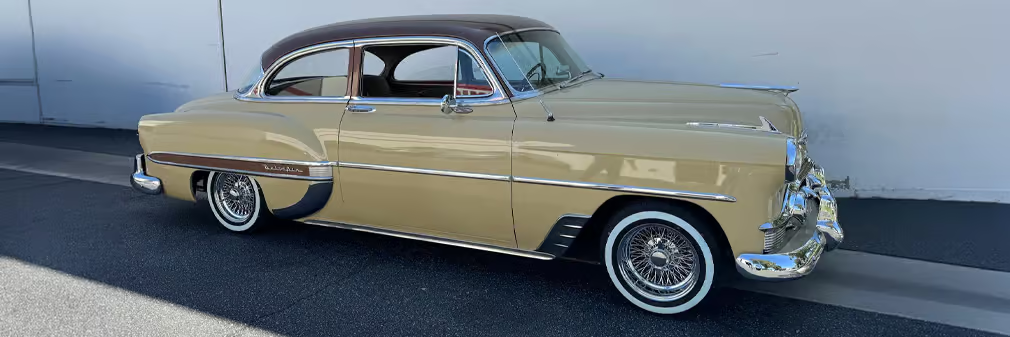
Fourteen-inch wire wheels are a longtime favorite for traditional lowrider and classic-car builds. They retain the smaller-wheel proportions associated with old-school customs while offering a little more wheel diameter than a typical 13-inch setup.
But choosing a 14-inch wheel is not simply a matter of deciding between chrome, gold, 72 spokes or 100 spokes. Wheel width, standard versus reverse construction, backspacing, tire size, adapters, brake clearance, fender clearance and suspension travel can completely change how the finished setup fits the vehicle.
Two of the most important sizes are 14×6 and 14×7 wire wheels. Although they differ by only one inch in nominal width, that difference can noticeably affect tuck, poke, tire shape and clearance on a lowered or hydraulic lowrider.
This guide explains how 14×6 and 14×7 setups behave, how reverse fitment changes the stance, what to consider when selecting tires, and how these wheels can work on classic Impalas, Monte Carlos, Regals, Cutlasses, Caprices, Cadillacs and other traditional builds.
Quick answer: A 14×6 wire wheel generally provides a narrower footprint and more clearance, while a 14×7 provides additional width and can create a more aggressive stance. A 14×7 reverse configuration typically produces the deepest visible lip of the common 14-inch setups, but actual wheel position depends on backspacing, adapter geometry and the vehicle itself.
Ready to browse available setups? Explore our complete collection of 14-inch wire wheels.
Quick 14×6 vs. 14×7 Wire Wheel Fitment Comparison
| Setup | General Character | Outer Stance | Clearance | Typical Goal |
|---|---|---|---|---|
| 14×6 Standard | Narrower and conservative | More tucked | Highest | Clearance-focused classic setup |
| 14×6 Reverse | Narrow wheel with deeper appearance | Moderate | Good to moderate | Traditional look with less width |
| 14×7 Standard | Wider footprint | Moderate | Moderate | Wider classic stance |
| 14×7 Reverse | Wide and deep-dish | Most aggressive | Lowest | Traditional lowrider stance where clearance allows |
This chart describes general tendencies rather than guaranteed fitment. Actual backspacing, adapter design, suspension geometry and body clearance can change the final position of any wheel.
What Does 14×6 Mean?
A 14×6 wire wheel has a 14-inch nominal bead-seat diameter and a six-inch nominal bead-seat width.
The six-inch measurement does not represent the wheel’s total outside-to-outside width. Wheel width is measured between the tire bead seats, so the complete wheel is physically wider than the advertised six-inch dimension.
For fitment purposes, the biggest advantage of a 14×6 is its narrower footprint.
Why Choose 14×6 Wire Wheels?
A narrower wheel may provide additional room around the:
- outer fender lip
- inner wheelhouse
- control arms and suspension components
- steering components
- body panels when the vehicle is lowered
This can make a 14×6 attractive for vehicles where complete wheel tuck is important or where the suspension moves through a large range of travel.
It can also preserve the traditional small-wire-wheel appearance without creating the broader stance of a 14×7.
What Does 14×7 Mean?
A 14×7 wire wheel uses the same 14-inch nominal diameter but increases the bead-seat width to seven inches.
That makes it one full inch wider than a 14×6.
If two wheels had exactly the same centerline offset, the additional inch of width would theoretically add approximately half an inch toward the inside and half an inch toward the outside.
In real lowrider fitment, however, wheel construction matters just as much as width.
A 14×7 reverse wheel can place considerably more of the wheel toward the outside than a 14×7 standard wheel, which is why the dimensions “14×7” alone are not enough to predict final stance.
Why Are 14×7 Wire Wheels So Popular?
14×7 gives a lowrider builder more wheel width while preserving the traditional 14-inch diameter.
Many builders choose this size because it can provide:
- a broader stance
- more visible wheel presence
- a deeper outer lip in reverse configurations
- classic small-wheel proportions
- multiple spoke and finish options
Your available wheel collection includes numerous 14×7 reverse designs in chrome, gold, 60-spoke, 72-spoke and 100-spoke configurations.
14×7 vs. 14×6: How Much Difference Does One Inch Really Make?
On a stock-height car, one inch of wheel width may not sound dramatic.
On a lowrider sitting close to the body, that difference can matter significantly.
Moving from 14×6 to 14×7 can affect:
- outer fender clearance
- inner suspension clearance
- steering clearance
- tire sidewall shape
- how deeply the wheel can tuck
- how far the wheel appears to poke
- clearance while the suspension is fully lowered
- clearance during a three-wheel stance
This is why choosing the widest wheel simply because it looks more aggressive is not always the right decision.
Standard vs. Reverse 14-Inch Wire Wheels
The difference between standard and reverse wire wheels can have an even greater effect on stance than the difference between 14×6 and 14×7.
Browse additional configurations in our reverse wire wheels collection.
Standard 14-Inch Wire Wheels
A standard configuration generally places more wheel toward the inside of the vehicle and creates a less pronounced outer lip than a comparable reverse setup.
Depending on the actual wheel specifications, this can help keep the tire and wheel closer to the body line.
A standard configuration can be particularly useful when:
- outer-fender clearance is limited
- the vehicle uses rear fender skirts
- maximum suspension tuck is important
- the owner prefers a less aggressive stance
Reverse 14-Inch Wire Wheels
A reverse wheel positions the center section differently within the wheel barrel to produce a deeper visible outer lip.
On a 14×7 wheel, reverse construction can create the classic deep-dish look associated with traditional lowriders.
The tradeoff is that a more aggressive wheel position can reduce outer-fender clearance.
That difference becomes especially important when a hydraulic or air-suspension vehicle is lowered into the wheel opening.
Does “14×7 Reverse” Tell You the Exact Offset?
No.
The term reverse describes the general construction and appearance of the wheel. It should not be treated as one universal offset or backspacing specification.
Two different 14×7 reverse wheels can potentially have different backspacing depending on their design and manufacturer.
The wheel’s actual measurements should be used whenever vehicle clearance is tight.
Understanding Backspacing on 14-Inch Wire Wheels
Backspacing measures the distance from the wheel’s mounting surface to the inner edge of the wheel.
In simple terms:
- More backspacing generally places more wheel inward.
- Less backspacing generally allows more wheel to sit outward.
However, traditional knock-off wire wheels introduce another component into the equation: the adapter.
The finished wheel position should therefore be evaluated using the complete installed wheel and adapter system, not just the wheel dimensions by themselves.
How to Understand Wheel Poke on a 14×7 Reverse Setup
Wheel poke describes how far the wheel or tire extends toward or beyond the outer fender line.
Four variables have the biggest influence:
1. Wheel Width
A 14×7 wheel occupies one inch more nominal width than a 14×6.
2. Backspacing or Offset
This determines how that wheel width is distributed between the inside and outside of the vehicle.
3. Adapter Position
The knock-off adapter becomes part of the complete mounting system and therefore affects the installed wheel position.
4. Tire Section Width
The tire may extend beyond the wheel itself. A tire’s actual section width therefore matters when evaluating fender clearance.
This is why two cars running “14×7 reverse” can visually sit differently even before suspension and body differences are considered.
Tucked vs. Flush vs. Poke With 14-Inch Wire Wheels
Tucked Fitment
A tucked wheel sits inside the body line and can move farther into the wheel opening as the vehicle is lowered.
For a build where maximum tuck is required, a 14×6 or appropriately positioned standard wheel may provide more clearance than an aggressive 14×7 reverse setup.
Flush Fitment
A flush setup positions the outer wheel and tire close to the fender line without intentionally extending far outside the body.
It can provide more visual presence than a deeply tucked wheel while maintaining a relatively clean relationship with the body.
Poke Fitment
A wheel has poke when part of the wheel or tire extends beyond the normal fender line.
Reverse 14×7 wire wheels are more likely to create this appearance than a narrower standard setup.
Some lowrider builders intentionally choose this stance. Others need the wheel to disappear completely into the body when the car is dropped.
The desired suspension behavior should therefore be decided before the wheel configuration is chosen.
14-Inch Wire Wheels vs. 13-Inch Wire Wheels
Both sizes are strongly associated with traditional lowrider styling, but they produce slightly different proportions.
| Characteristic | 13-Inch | 14-Inch |
|---|---|---|
| Traditional lowrider appearance | Excellent | Excellent |
| Wheel diameter | Smaller | 1 inch larger |
| Typical visual effect | More compact wheel | Slightly more wheel presence |
| Brake barrel room | Less | Potentially more |
| Tire selection | Different 13-inch range | Different 14-inch range |
If you are considering the smaller setup, read our 13-inch wire wheel fitment guide for a detailed comparison of 13×5.5 and 13×7 configurations.
You can also browse our 13-inch wire wheels to compare available designs directly.
14×6 vs. 14×7 for Hydraulic Lowriders
Hydraulic suspension makes fitment more complicated because the wheel does not remain in one fixed position relative to the body.
A setup should ideally be evaluated at:
- normal cruising height
- fully lowered height
- full left steering lock
- full right steering lock
- the suspension positions used during three-wheeling
A 14×7 reverse wheel may provide the aggressive lowrider stance you want at cruising height but leave less clearance when the vehicle is dropped.
A 14×6 may provide a larger margin for body and suspension movement where deep tuck is the priority.
Neither size is universally correct for hydraulics. The correct configuration depends on how the individual car is intended to move.
For additional traditional options, browse our lowrider wire wheels.
Steering Clearance With 14-Inch Wire Wheels
Front-wheel clearance should always be checked with the steering turned fully in both directions.
A wheel and tire can clear perfectly while pointed straight ahead but contact:
- the inner fender
- sway-bar components
- control arms
- frame components
- bodywork
when the steering reaches full lock.
This is especially important on vehicles that have been lowered substantially or modified over the years.
Brake Clearance With 14-Inch Wire Wheels
A 14-inch wheel generally provides more internal diameter than a comparable 13-inch wheel, but brake clearance still cannot be assumed.
Many classic vehicles originally equipped with drums or smaller factory brakes have since been converted to larger disc brakes.
Before ordering, determine whether the vehicle has:
- factory drum brakes
- factory disc brakes
- an aftermarket disc conversion
- oversized calipers
- a modern brake upgrade
A 14-inch wheel that clears one Impala may not clear another Impala with a completely different brake package.
What Tire Size Should You Use on 14-Inch Wire Wheels?
There is no single tire size that should automatically be used on every 14×6 or 14×7 wire wheel.
Tire selection should take into account:
- approved rim-width range
- overall tire diameter
- section width
- load rating
- speed rating
- available fender clearance
- desired whitewall appearance
Ninja Tire’s current 14-inch collection includes wheel-and-tire packages using sizes such as 175/70R14, but the suitability of any tire should be verified against the exact wheel width and vehicle application.
Why Overall Tire Diameter Matters
Tire diameter affects more than appearance.
A taller tire moves the tread closer to the fender and surrounding bodywork, which can reduce clearance when the car is lowered.
A shorter overall tire can create more vertical clearance but may change ride height, speedometer behavior and the overall visual proportions of the build.
The complete wheel-and-tire diameter should therefore be considered—not simply the fact that both tires fit a 14-inch rim.
Why Tire Width Matters
The tire’s section width can extend beyond the wheel itself.
This means a wheel may technically fit while the selected tire creates contact with the fender or suspension.
For tight-clearance applications, evaluate both wheel position and the specifications of the exact tire being installed.
Whitewall Tires on 14-Inch Wire Wheels
Whitewall tires and 14-inch wire wheels create one of the most traditional combinations available for classic lowrider builds.
Your current 14-inch collection includes packages with different whitewall widths, allowing the tire itself to become part of the visual design.
Explore our custom whitewall tires for additional sizes and whitewall options.
Narrow Whitewall
A narrower whitewall preserves more visible black sidewall and can create a cleaner appearance.
Wide Whitewall
A wider whitewall places greater visual emphasis on the tire and produces a stronger traditional custom-car look.
The whitewall treatment does not change the need to verify the underlying tire’s rim-width approval, load capacity and overall vehicle compatibility.
Will 14-Inch Wire Wheels Fit a Chevy Impala?
14-inch wire wheels can work extremely well with many classic Chevrolet Impala builds, but the word “Impala” alone is not enough to guarantee a particular configuration.
The correct setup depends on:
- model year
- brake configuration
- suspension
- hydraulic setup
- fender skirts
- wheel width
- backspacing
- tire dimensions
A 14×7 reverse can provide the wider deep-dish stance many lowrider builders prefer, while a narrower or standard configuration may make more sense when maximum tuck or skirt clearance is required.
14-Inch Wire Wheels on a Chevrolet Monte Carlo
Classic Monte Carlos are another popular platform for 14-inch lowrider wheels.
Pay particular attention to front steering clearance and the wheel’s relationship with the rear fender as the suspension moves.
A reverse 14×7 can create a stronger outward stance, while a 14×6 can provide additional clearance on builds designed to sit especially low.
The exact vehicle should always be inspected rather than copying another Monte Carlo’s advertised wheel size.
14-Inch Wire Wheels on a Buick Regal
Buick Regal and other G-body lowrider builds frequently use smaller-diameter wire wheels.
When deciding between 14×6 and 14×7, consider:
- front steering clearance
- rear fender clearance
- suspension modifications
- desired poke or tuck
- brake conversions
If deep dish is the goal, a 14×7 reverse is a natural option to consider where sufficient clearance exists.
14-Inch Wire Wheels on an Oldsmobile Cutlass
The Oldsmobile Cutlass and Cutlass Supreme are also well suited to traditional lowrider styling.
Because many of these vehicles have been modified over decades, wheel fitment should be based on the actual car rather than factory specifications alone.
A lowered Cutlass with upgraded brakes or altered suspension may have very different clearance from an otherwise identical-looking vehicle.
14-Inch Wire Wheels on a Chevy Caprice
A Chevrolet Caprice can accommodate several 14-inch lowrider configurations depending on the generation and suspension setup.
A 14×7 may provide the wider stance many builders want, while a 14×6 can be considered where additional body clearance is valuable.
Cars with aftermarket disc brakes should also be checked carefully for internal wheel clearance.
14-Inch Wire Wheels on Classic Cadillacs
Classic Cadillac builds deserve additional consideration because vehicle weight, brakes and suspension design can vary considerably between models.
Before installing a 14-inch setup, verify:
- wheel load capability
- tire load rating
- brake clearance
- suspension clearance
- overall tire diameter
A wheel-and-tire combination appropriate for a lighter lowrider should not automatically be assumed appropriate for a much heavier Cadillac.
How to Measure Your Vehicle Before Ordering 14-Inch Wire Wheels
Actual vehicle measurements are much more useful than relying only on year, make and model.
- Record your current wheel and tire size. Include current wheel width if available.
- Determine the existing wheel’s offset or backspacing.
- Measure outer fender clearance. Note the distance between the tire and outer body or skirt.
- Measure inner clearance. Check suspension, steering and chassis components.
- Identify your brake system. Note any aftermarket disc conversion or oversized caliper.
- Turn the steering fully left and right. Verify clearance throughout the steering range.
- Cycle the suspension. Hydraulic and air-suspension vehicles should be checked throughout the range actually used.
- Decide on your desired stance. Determine whether you want tucked, flush or visible poke before choosing standard or reverse.
These details allow a fitment recommendation to be based on the actual car rather than assumptions.
Common 14-Inch Wire Wheel Fitment Mistakes
| Mistake | Why It Matters |
|---|---|
| Choosing only by diameter | 14×6 and 14×7 can sit very differently. |
| Assuming every reverse wheel has the same offset | Actual backspacing can vary by wheel design. |
| Ignoring the adapter | The complete mounted system determines wheel position. |
| Checking clearance only while parked | Hydraulic suspension dramatically changes wheel-to-body clearance. |
| Ignoring full steering lock | Front tires can rub only when turning. |
| Ignoring brake upgrades | Aftermarket calipers may interfere with the inner wheel. |
| Choosing tires only by appearance | Approved rim width, diameter and load capacity also matter. |
| Copying another vehicle’s setup | Two similar cars may have completely different modifications. |
14×6 or 14×7: Which One Should You Choose?
A 14×6 is generally worth considering when your priorities include:
- additional fender clearance
- easier wheel tuck
- a narrower traditional stance
- more room for suspension movement
A 14×7 is generally worth considering when your priorities include:
- more wheel width
- stronger visual presence
- a broader stance
- a deeper outer lip in reverse configurations
After choosing the width, the next decision is standard versus reverse.
A 14×7 standard and a 14×7 reverse should never be treated as identical fitments simply because they share the same diameter and width.
Which 14-Inch Setup Gives the Deepest Dish?
For builders focused on deep-dish appearance, a 14×7 reverse wire wheel is generally the most aggressive of the common 14×6 and 14×7 configurations.
That deeper appearance comes with an important tradeoff: less outer clearance.
Maximum lip depth should therefore be balanced against:
- fender position
- suspension movement
- steering clearance
- tire width
- the amount of tuck required when lowered
60-Spoke vs. 72-Spoke vs. 100-Spoke Wire Wheels
Spoke count primarily changes the visual character of the wheel rather than its basic fitment.
60-Spoke
A 60-spoke setup creates a more open pattern and is available in specialty lace configurations such as triple-cross designs.
72-Spoke
72-spoke designs provide a traditional open-wire appearance and are popular in cross-lace and specialty patterns.
100-Spoke
A 100-spoke wire wheel creates a denser, more detailed appearance and is especially popular in 14×7 reverse chrome and gold configurations.
You can browse our chrome wire wheels or gold wire wheels to compare additional finishes and sizes.
For actual fitment, wheel width, backspacing, adapter design and brake clearance matter more than spoke count.
Knock-Off 14-Inch Wire Wheel Installation
Traditional lowrider wire wheels commonly use a knock-off adapter system between the vehicle hub and the wheel.
The adapter must be appropriate for the vehicle’s bolt pattern and installation requirements.
Correct directional installation, wheel engagement and knock-off installation are essential.
After installation, inspect:
- adapter seating
- wheel engagement
- knock-off installation
- tire pressure
- body clearance
- steering clearance
Follow the wheel manufacturer’s installation and maintenance instructions. If the installer does not regularly work with traditional knock-off wire wheels, using a shop familiar with these systems is recommended.
Frequently Asked Questions About 14-Inch Lowrider Wire Wheel Fitment
What is the difference between 14×6 and 14×7 wire wheels?
Both wheels have a 14-inch nominal diameter, but the 14×7 is one inch wider at the bead seats. That additional width can affect fender clearance, inner suspension clearance, tire selection and the finished stance.
Does a 14×7 wire wheel stick out farther than a 14×6?
It can, but width alone does not determine final position. Backspacing, offset, standard versus reverse construction and adapter geometry also affect how far the wheel sits outward.
What is a 14×7 reverse wire wheel?
A 14×7 reverse wire wheel uses reverse construction to create a deeper visible outer lip. It is popular on traditional lowriders because of its aggressive deep-dish appearance. Actual backspacing should still be verified because reverse does not represent one universal offset.
Is 14×6 better for wheel tuck?
The narrower width can provide additional clearance compared with a similarly positioned 14×7, which may make 14×6 easier to work with when deep tuck is the priority. Final fitment still depends on backspacing and the vehicle.
Are 14×7 wire wheels good for hydraulic lowriders?
14×7 wire wheels are commonly used on hydraulic lowrider builds, particularly in reverse configurations. Clearance should be checked through the entire suspension range because the wheel-to-body relationship changes as the vehicle is raised, lowered or three-wheeled.
Will 14-inch wire wheels fit a Chevy Impala?
They can work on many classic Impala applications, but exact fitment depends on model year, brakes, wheel width, backspacing, suspension, tire size and whether the vehicle uses fender skirts or other modifications.
Can I put 14-inch wire wheels on a Regal, Cutlass or Monte Carlo?
These vehicles are popular lowrider platforms for 14-inch wire wheels. However, exact fitment should be verified because brake conversions, suspension modifications and body clearance can vary between otherwise similar cars.
What tire size works on 14-inch wire wheels?
There is no universal tire size for every 14×6 or 14×7 setup. Tire selection should account for the manufacturer’s approved rim-width range, overall diameter, section width, load rating and available vehicle clearance.
Can I run 175/70R14 tires on 14-inch wire wheels?
175/70R14 is used in some 14-inch lowrider wheel-and-tire packages, but compatibility depends on the exact wheel width and the approved rim-width specifications published by the tire manufacturer. Always check the specifications of the exact tire being installed.
Are 14-inch wheels easier to clear disc brakes than 13-inch wheels?
The larger wheel diameter can provide additional internal space, but it does not guarantee brake clearance. Large factory calipers and aftermarket disc-brake conversions should still be checked before ordering.
Do reverse 14-inch wire wheels cause more poke?
Reverse configurations generally create a deeper outer lip and can position more of the wheel outward than a comparable standard setup. The exact amount of poke depends on wheel dimensions, backspacing and the adapter system.
Should I choose 60-, 72- or 100-spoke wire wheels?
Spoke count is primarily an appearance decision. 60- and 72-spoke wheels create a more open pattern, while 100-spoke wheels provide a denser look. Wheel dimensions, backspacing and brake clearance are more important for fitment.
Shop 14-Inch Wire Wheels for Your Lowrider
Choosing between 14×6 and 14×7 requires more than simply deciding which wheel looks wider.
The vehicle’s body clearance, brakes, suspension travel, desired stance, standard or reverse construction and tire dimensions should all be considered together.
If additional clearance and easier tuck are priorities, a 14×6 may be the better direction. If the goal is a wider stance and stronger deep-dish appearance, a 14×7 reverse may be worth considering where sufficient clearance exists.
Browse Ninja Tire’s full collection of 14-inch wire wheels, including 14×6 and 14×7 configurations, reverse designs, chrome, gold, multiple spoke patterns and complete whitewall tire packages.
For a fitment recommendation, provide your vehicle’s year, make, model, existing wheel and tire size, brake setup, suspension type and desired stance. The more information available about the actual car, the more accurately the wheel configuration can be evaluated.


